Instrument maker
How do we draw the line between hobby and profession? Or perhaps I should ask how my profession has led me to my hobby? I began making flutes and recorders 25 years ago for two reasons: The first was that my father spent many happy hours in his instrument workshop, the second was that I was never completely satisfied with the my instruments. Until recently, it has been difficult to find good recorders and flutes based on historical models. Fortunately, there are now many talented instrument makers competing for the performers’ attention. Even so, the hours spent in my workshop have deepened my understanding of music and performance—and even myself.
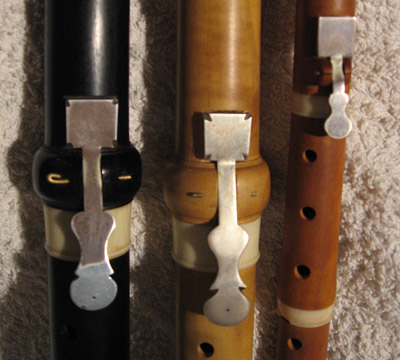
I have made flutes both for myself and other performers. My instruments are used in professional institutions and by performers in Scandinavia, Germany and Switzerland.
Baroque flutes (transverse, 1 key) after:
- P. Appelberg (Copenhagen, second half of the 18th century)
- G.A. Rottenburgh (Brussels, second half of the 18th century)
- C. Palanca, with modifications (Torino, 18th century)
Piccolo after:
- Triébert (Paris, early 19th century)
Pitch: A - 415 Hz, material: Boxwood or grenadilla with artificial ivory rings and a silver key.
I have also made some recorders of the Ganassi type (soprano and alto) in boxwood, blackwood, maple and plum, as well as some flutes for use in Norwegian folk music.